
Week 3 Update – Insurance Requirements for Vessels in EU waters, DHL Imports to the US, Fine Art Shipping
New Insurance Requirement for All Vessels in EU Waters

“By requiring that all vessels operating in our vicinity are properly insured, the EU’s ability to monitor and, if necessary, investigate maritime activities is strengthened, addressing risks posed by uninsured or unsafe vessels,” – European Commission
Due to the growing challenge of how ‘dark fleet‘ vessels circumvent EU environmental and VAT regulations, the EU has decided to require all vessels who traverse EU waters, not just EU Ports, to retain insurance.
Any shipper / importer who relies on Ocean Freight to / from the EU should be slightly concerned.
Why?
More Scrutiny & Delays: Expect stricter checks on all ships in EU waters, potentially delaying legitimate trade.
Higher Insurance Costs: EU action on risky ships may raise insurance premiums for all shippers.
Supply Chain Issues: Crackdown on a large fleet could cause bottlenecks and delays for EU imports.
Reputational Risks: Using shippers linked (even indirectly) to risky vessels could harm your reputation.
Unintended Impacts: New rules for safety/security might unintentionally hurt trade efficiency.
Geopolitical Uncertainty: EU’s Russia focus could create shipping market volatility.
find the complete article here
DHL Suspends All B2C US Imports – For Now
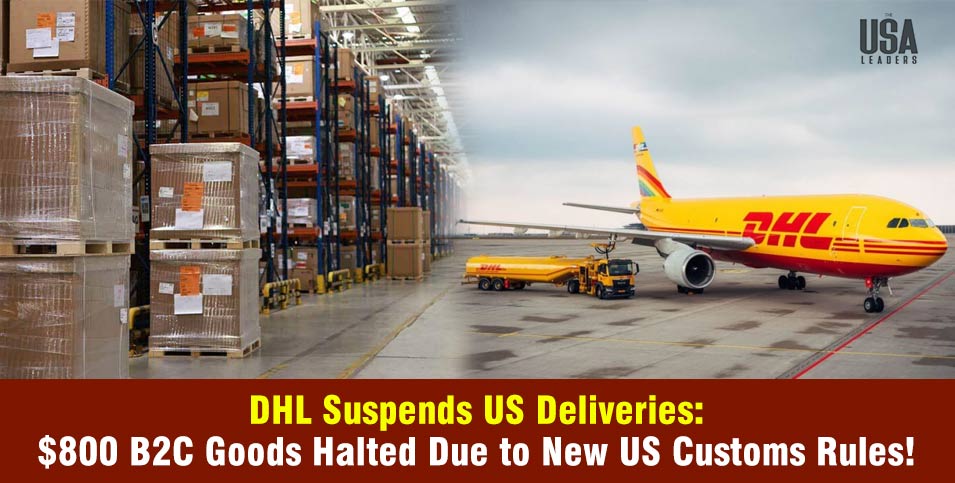
Due to the recent update to USTR regulations and specifically, the de minimis rule, DHL has decided to suspend all B2C imports to the United States.
DHL has openly admitted that because of the lowered threshold ($2500 and up to now $800 and up) for formal entries, they simply cannot keep up. As a business, they decided it was worth the loss of revenue in order to avoid further US Customs headaches.
How does this impact Small-Medium Businesses in the US?
Reduced Coverage: loss of a fast, somewhat-reliable carrier network that is known for having a user-friendly online shipping platform.
Reduced Imports: a key benefit of DHL Express is its ease-of-use for overseas suppliers. With this loss, some suppliers may not have another carrier relationship for CIF or even FOB shipments.
How can Small-Medium Businesses pivot?
Freight Forwarding Services: take advantage of strong data-driven freight forwarders like ARC Global who are licensed with the FMC and hold competitive contracts with IATA-backed carriers like Delta, Lufthansa, United, and others.
I was able to save a personal client of mine roughly 50% on her freight bill by switching from a ‘closed ecosystem’ network to ARC’s forwarding network. The ability to pick and choose carriers at each segment of the routing allows for better equipment coverage, rates, etc.
Fine Art Shipping – A Few Helpful Tips

Over the last several weeks, I’ve been routing greater volumes of Fine Art internationally. For an industry that ebbs and flows, this is a great sign that buyers are active and the Arts are continued to be enjoyed by discerning clientele.
Now is the perfect time to reiterate some essential shipping tips with regard to Fine Art and by extension, high value goods.
Insure Cargo + Freight: many Galleries and artists do not know they can insure the transport of their cargo, not just the cargo itself. I highly recommend requesting Cargo + Freight insurance from your freight forwarder.
ATA Carnet: an ATA Carnet is essentially a ‘passport’ for your freight, allowing the removal of Duty / Tax obligations for freight that is not sold, and returned to shipper within 365 days. Many Galleries who exhibit internationally end up paying the Duty and Tax on their works without realizing this huge benefit.
Duty Rate for EU Imports under HTS 9701: Recent shipments to Europe have confirmed the current Duty rate for artwork under HTS 9701. While there are other factors influencing this duty rate (origin, composition, age, trade agreements), agents in Europe confirm 20% or 5% (again based on above factors).
ISPM-15 Regulations: Many countries where Galleries are active engage in the ISPM-15 regulations. This is a phytosanitary regulation enacted to protect native species from invasive ones hitching a ride on crates, pallets, and even works themselves. Make sure your crates, pallets, and any wood in works is pre-treated for bugs etc. under ISPM-15 regulations. Otherwise, your shipment will not clear customs.
Short update this week, thank you for reading and engaging with these info-drops. As a data-driven consultant in the international logistics space, it is my duty to ensure cost-overrun is reduced and client satisfaction at an all-time high.
What I’d like to do is hop on a call this week to learn how you’re navigating international shipments. What’s working, what isn’t, what can be improved and what’s on your ‘logistics wish list.’
Let’s tackle it together.
Matthew Fotion
matthew.fotion@arcglobal.us

 Reliable Forwarding